Subash Timilsina

Subash Timilsina

PhD in CS with minor in AI | Oregon State University

Actively seeking full-time opportunities in machine learning and AI.

I am a Ph.D. candidate in Computer Science at Oregon State University, advised by Dr. Xiao Fu, with a minor in Artificial Intelligence. My research focuses on machine learning, particularly controllable generative models, unsupervised and self-supervised representation learning, multimodal learning, and optimization for AI. I am especially interested in developing theoretically grounded methods for learning meaningful and identifiable representations from complex, unpaired, and multimodal data.

My recent work includes content-style representation learning, identifiable domain transfer, generative models for inverse problems, and activation-steering methods for improving large language model behavior. My research has been published in venues including NeurIPS, ICML, IEEE TSP, SPL, and ICASSP.

Before starting my Ph.D., I worked as a Data Scientist at Docsumo, where I developed computer vision and natural language processing systems for extracting structured information from financial and business documents such as invoices, bank statements, W2 forms, and ACORD documents.

I'm currently seeking full-time opportunities in machine learning and would love to connect with researchers, engineers, and teams working on impactful AI/ML problems.

Timeline

Select Publications

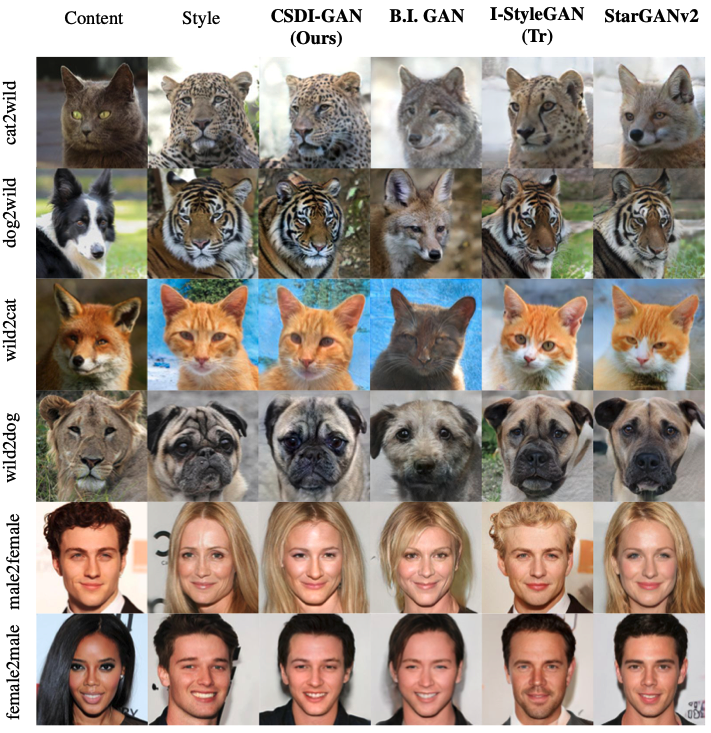
content Style Learning with Differential Independence

Content-Style Identification via Differential Independence

Subash Timilsina, Hoang-Son Nguyen, Sagar Shrestha, Xiao Fu

International Conference on Machine Learning (ICML) 2026

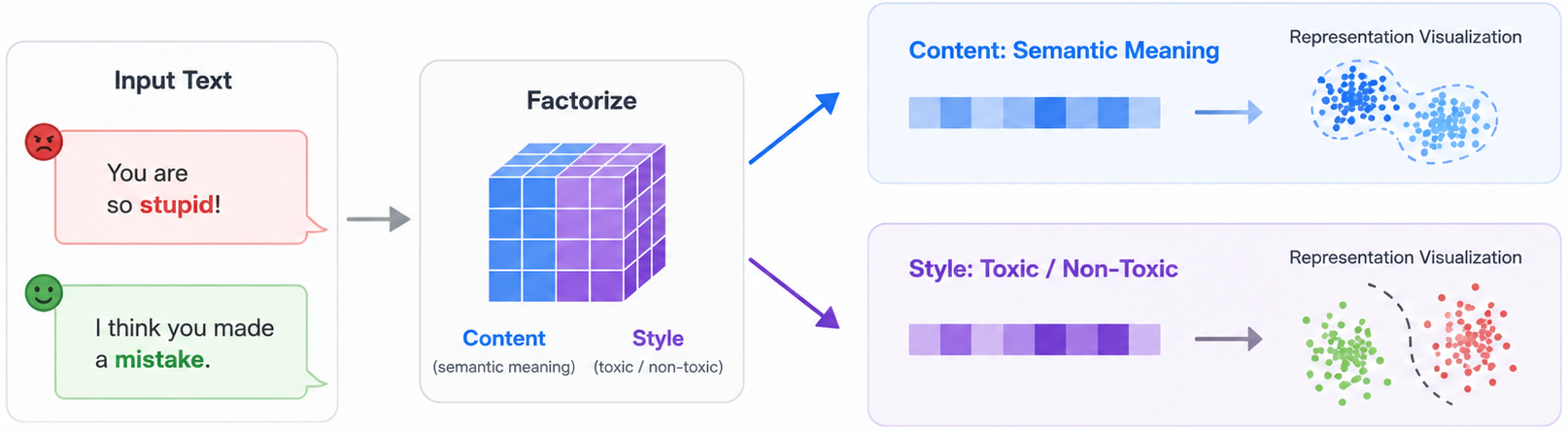
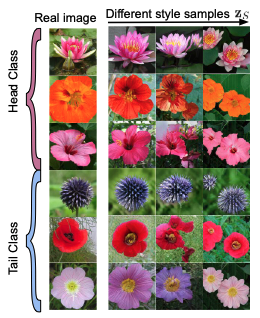
In this paper, we propose a new way to learn content and style representations from unpaired multi-domain data. Our key idea is differential independence, which separates content and style by making their local effects on the data manifold orthogonal. This condition works even when content and style are statistically dependent and even when the model has a dense Jacobian. We also introduce a scalable regularizer and show benefits in counterfactual generation and domain translation.

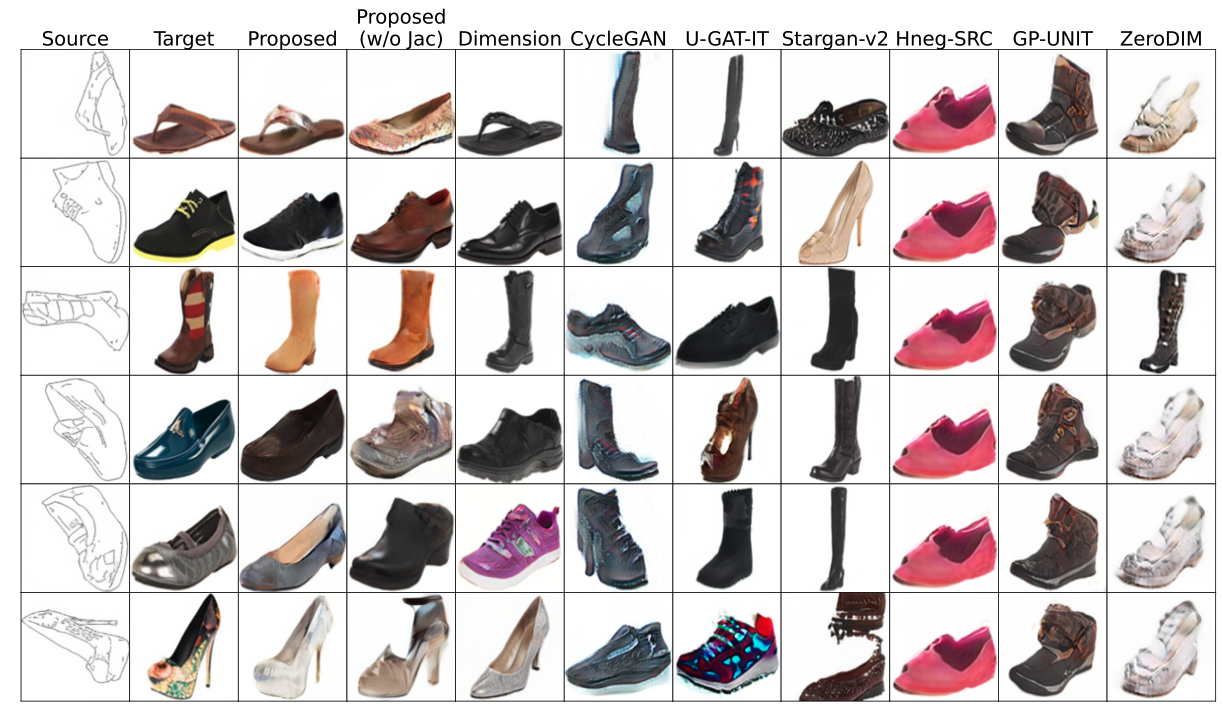
Domain Translation with Single Sample

Domain Transfer Becomes Identifiable via a Single Alignment

Sagar Shrestha, Subash Timilsina, Hoang-Son Nguyen, Xiao Fu

International Conference on Machine Learning (ICML) 2026

In this paper, we study how to learn reliable mappings between source and target domains with minimal supervision. We show that, under a sparsity structure, matching distributions plus one paired anchor sample can identify the correct transfer map. We also introduce a scalable regularizer and validate the method on synthetic and real-world domain transfer tasks.

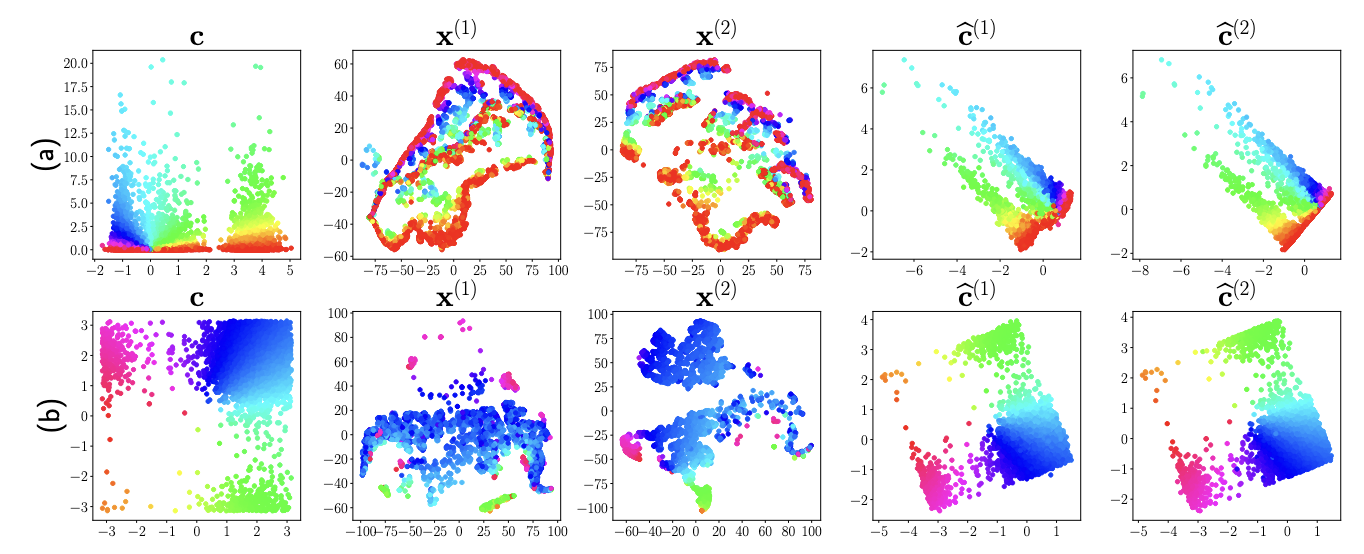
Shared Component Analysis

Identifiable Shared Component Analysis of Unpaired Multimodal Mixtures

Subash Timilsina, Sagar Shrestha, Xiao Fu

Neural Information Processing Systems (NeurIPS) 2024

In this paper, we study shared representation learning from unaligned multi-modal data. We propose a distribution-matching framework that can identify modality-invariant shared components without requiring paired samples. Our theory gives mild conditions for identifiability, and experiments on synthetic and real-world datasets support the results.

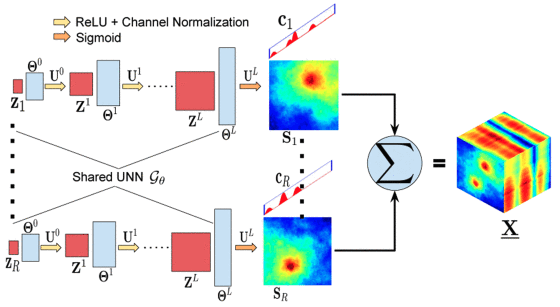
Deep Prior Based Spectrum Cartography

Domain-Factored Untrained Deep Prior for Spectrum Cartography

Subash Timilsina, Sagar Shrestha, Xiao Fu

IEEE Signal Processing Letters (SPL) 2025

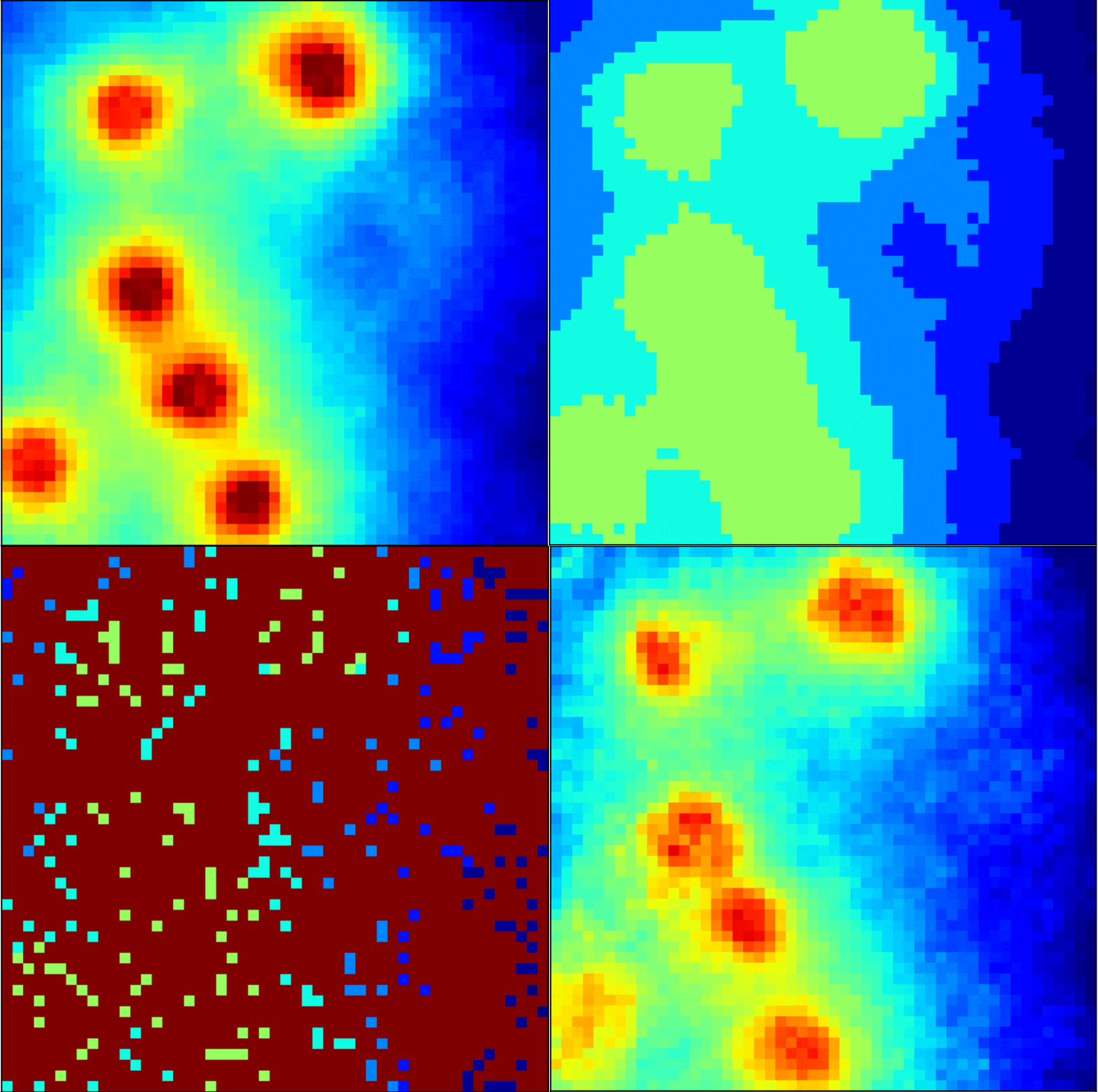
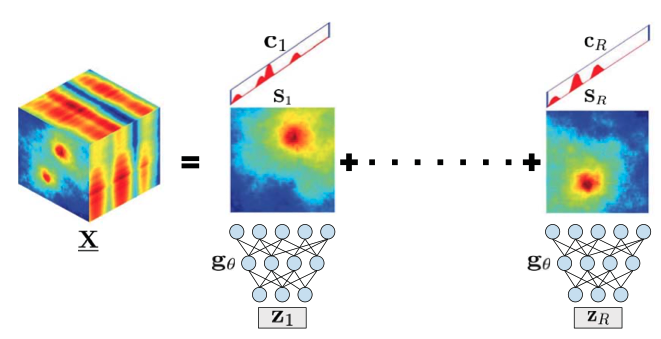
In this paper, we propose a training-free method for reconstructing high-dimensional signals (e.g., radio maps) using untrained neural networks. Our approach uses the network architecture and a tensor factorization model using spatio-spectral structure as priors, allowing accurate tensor estimation from limited sensor data without needing a training dataset.

Quantized Radio Map Estimation

Quantized Radio Map Estimation Using Tensor and Deep Generative Models

Subash Timilsina, Sagar Shrestha, Xiao Fu

IEEE Transactions on Signal Processing (TSP) 2023

This paper develops machine learning methods for recovering structured high-dimensional signals from sparse, noisy, and quantized observations. By modeling radio maps as low-dimensional tensors, the method can reconstruct useful information even when only limited low-resolution sensor data is available. This is relevant to scalable sensing, edge AI, wireless intelligence, and resource-constrained machine learning systems where collecting or transmitting full-resolution data is expensive.

Deep Quantized Spectrum Cartography

Deep Spectrum Cartography Using Quantized Measurements

Subash Timilsina, Sagar Shrestha, Xiao Fu

IEEE International Conference on Acoustics, Speech and Signal Processing (ICASSP) 2023

This project develops machine learning methods for recovering high-dimensional signals from sparse and quantized sensor feedback. By combining deep generative priors, random quantization, and maximum likelihood estimation, the method enables accurate reconstruction when full-resolution data is unavailable. This is relevant to edge AI, wireless sensing, compressed sensing, and resource-constrained ML systems where communication bandwidth and data quality are limited.

Sound Source Localization

Search Disaster Victims using Sound Source Localization

Abhish Khanal, Deepak Chand, Prakash Chaudhary, Subash Timilsina, Sanjeeb Prasad Panday, Aman Shakya

ISCRAM 2020 — International Conference on Information Systems for Crisis Response and Management

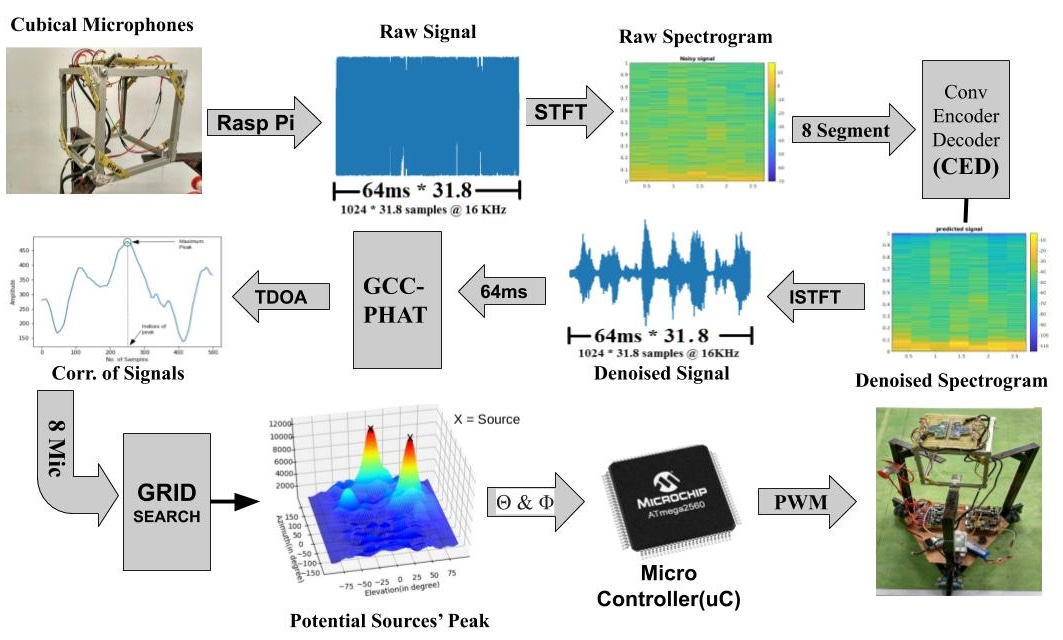
This project combines robotics, signal processing, and machine learning for real-time audio-based localization. We built an autonomous robot with an eight-microphone array and used GCC-PHAT for time-delay estimation to identify the direction of sound sources. We also developed a VAE-based audio denoiser using spectrogram representations, improving robustness in noisy environments. The project is relevant to embodied AI, audio ML, robotics perception, and disaster-response systems.

Projects

Blogs

Writing Soon...

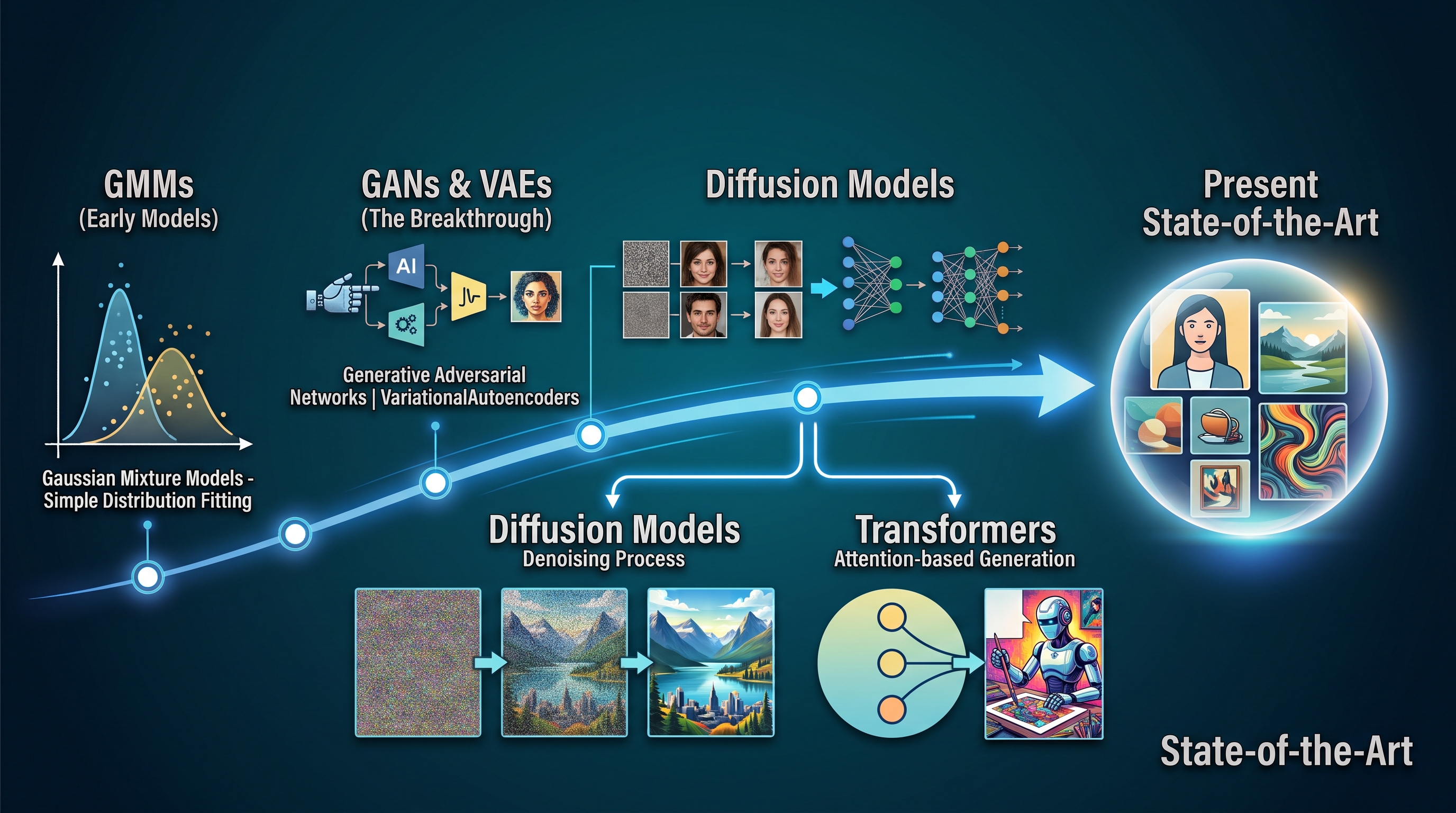
Evolution of Generative Models

A brief history of generative models and their evolution.

Writing Soon...

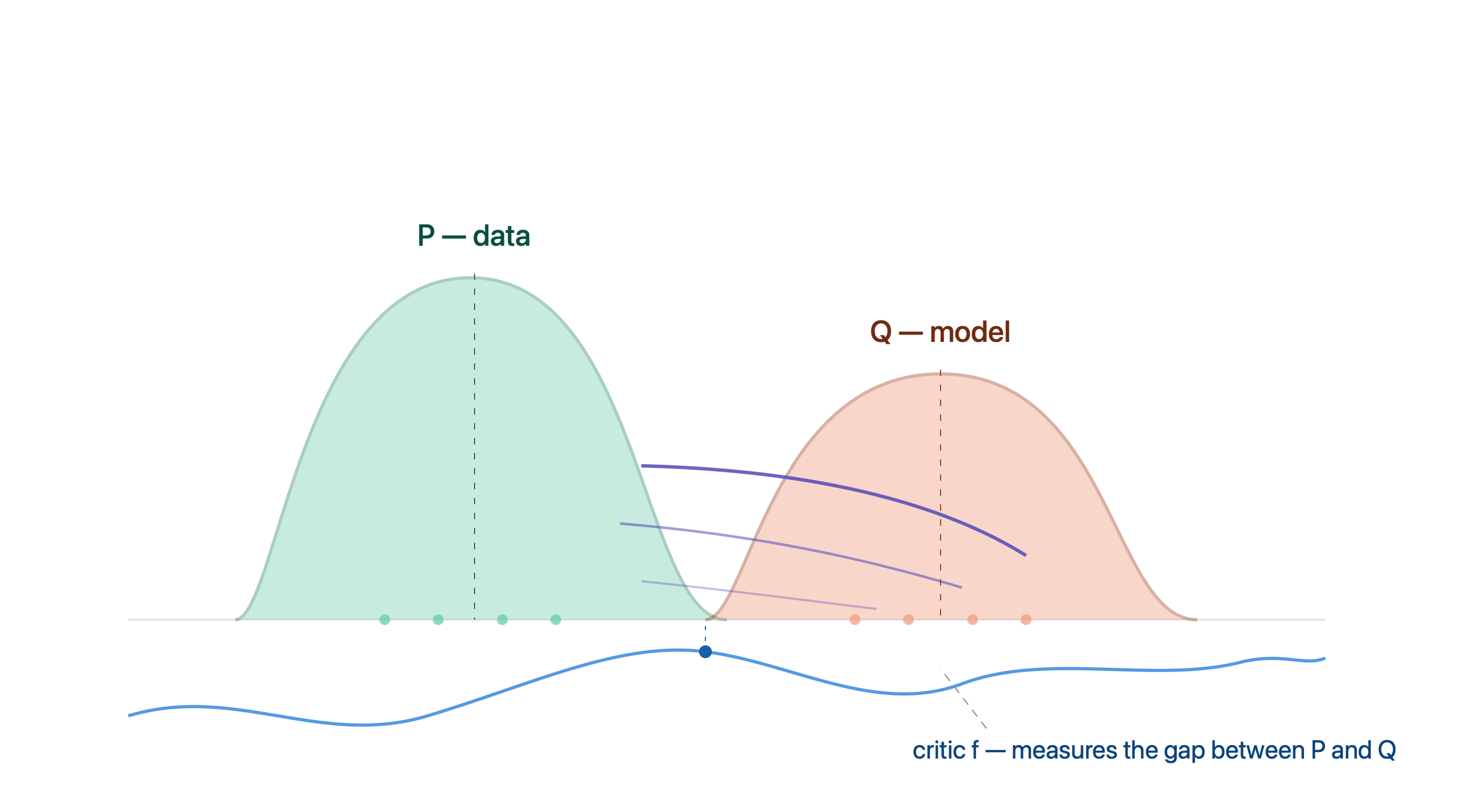
How to do distribution matching?

A guide to distribution matching for generative models.